
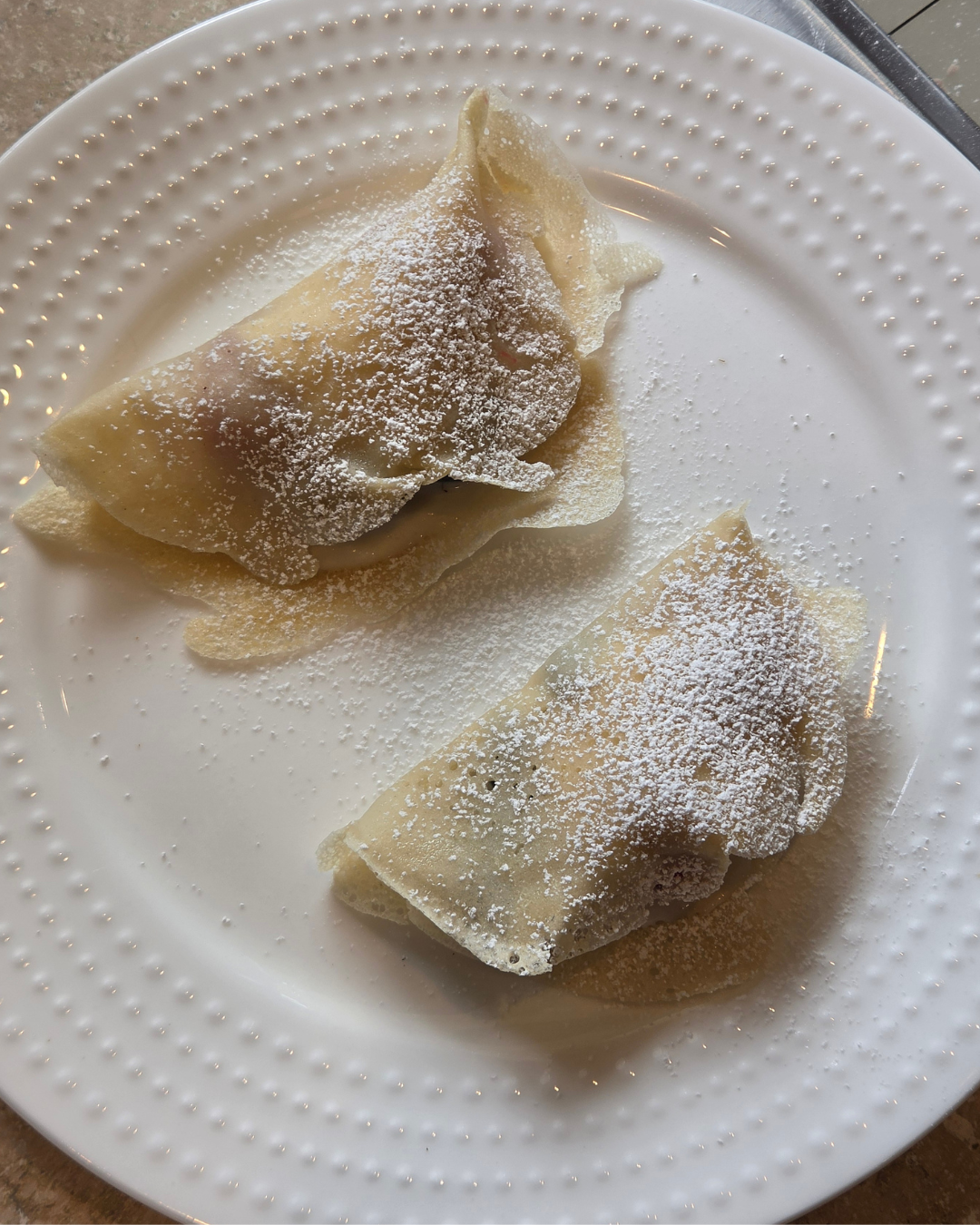
Gluten-Free, Egg-Free, and Still Delicious
There are some foods that just stay with you.
For me, crepes are one of them.
I remember my mom making them on the weekends — simple ingredients, a warm kitchen, and stacks of soft, delicate crepes filled with berries and whipped cream. Sometimes strawberries, sometimes blueberries, sometimes just a little powdered sugar. Nothing fancy… but it always felt special.
For a long time, I didn’t think I could bring that tradition back.
Between sensitivities to dairy, wheat, and eggs, crepes felt like one of those “leave it in the past” foods. And honestly, I thought eggs were required — like, structurally required.
But recently, after enjoying an amazing crepe while in Las Vegas, I decided it was time.
And let me tell you…
There was a learning curve.


✨ What I Learned (So You Don’t Have To)
My first instinct was that the recipe ratio seemed off.
Too much liquid. Not enough structure.
And I was right… but also not quite right.
Here’s what I discovered:
- Crepe batter should be much thinner than you think
- When you remove eggs, you must replace the structure (not just the moisture)
- Gluten-free flour needs a smoother mix — whisking alone didn’t cut it
- The first crepe is always a test (this is just part of the process!)
- And maybe most importantly…
👉 You have to trust the swirl
Once I stopped trying to make the batter “look right” and instead let it be thin and fluid, everything changed.
🥞 My Go-To Gluten-Free, Egg-Free Crepe Recipe
This is the version that finally worked beautifully.
Ingredients
- 1 cup gluten-free flour blend
- 1½ to 1¾ cups almond or soy milk (I used vanilla almond milk)
- 2 tsp egg replacer
- 1 tbsp melted coconut oil or butter
- 1–2 tbsp sugar (optional — I used 2)
- Pinch of salt
- ½ tsp vanilla (optional — skip if using vanilla milk)
🔑 Step 1: Create the Binder (Don’t Skip This)
In a small bowl:
- Mix 2 tsp egg replacer + ½ cup of the milk
Let it sit briefly to hydrate.
This step replaces the structure that eggs normally provide — and it makes a big difference.
🌀 Step 2: Blend for Smoothness
Add all ingredients to a blender or food processor and blend until smooth.
I tried whisking first… and ended up with lumps.
Blending completely solved that.
🥞 Step 3: Cook (and Trust the Process)
Preheat a nonstick pan or electric griddle
Lightly grease if needed
Pour a small amount of batter
Pick up the pan and swirl immediately to spread it thin
The thinner the better — this is where crepes become crepes.
- Cook until edges look dry and the center is set
- Flip and cook briefly on the other side
👉 I found that as the edges cooked, I could peel it up and flip it. Just watch out for burned fingers.
These do take a little longer than traditional crepes — just keep an eye on them.
💡 Texture Tip
Your batter should look like:
👉 Light cream — thin and pourable
If it feels “too thin,” you’re probably right where you need to be.
🍓 Easy Cream & Berry Filling
This part might have been my favorite.
Cream Filling
- 4 oz cream cheese
- ½ cup whipped cream (or coconut whipped cream)
- 2 tbsp powdered sugar
- ½ tsp vanilla
Whip/mix until smooth and fluffy.
To Assemble
- Spread a swipe of cream filling
- Add fresh berries
- Add a dollop of whipped cream
- Fold the crepe
- Finish with a light dusting of powdered sugar
Simple. Beautiful. Delicious.
This recipe felt like a small win… but also something bigger.
It was bringing back a memory.
Recreating something I thought I had lost.
And doing it in a way that still works for my body now.
And maybe that’s what this whole journey is about:
Not perfection.
Not restriction.
But finding ways to bring joy back to the table — in a way that feels good.
FAQs
What is the best flour substitute for these crepes?
A gluten-free flour blend works well for these crepes, especially one made with rice flour, tapioca starch, or potato starch. For the best texture, use a blend rather than a single flour so the crepes stay soft, flexible, and easy to fold.
How do I replace the eggs?
You can make egg-free crepes by using ingredients that help bind the batter, such as ground flaxseed, chia, starches, or a gluten-free flour blend with good structure. Letting the batter rest also helps the ingredients hydrate and hold together better while cooking.
Can I make the batter in advance?
Yes, gluten-free egg-free crepe batter can usually be made in advance and stored in the refrigerator for up to 24 hours. Stir or whisk it well before cooking, because gluten-free flours and starches may settle as the batter rests.
How do you keep gluten free crepes from breaking?
To keep gluten-free crepes from breaking, let the batter rest, cook them on a well-heated nonstick pan, and flip them gently once the edges look set. Making sure the batter is thin enough and not overcooked will also help the crepes stay flexible.
Are gluten and egg free crepes healthy?
Gluten-free and egg-free crepes can be a healthy option depending on the ingredients and fillings you use. They are especially helpful for people avoiding gluten or eggs, and you can make them more nourishing with fruit, yogurt alternatives, nut butter, vegetables, or lean protein fillings.
Why are my gluten free crepes gummy or dense?
Gluten-free crepes can turn gummy or dense if the batter is too thick, overmixed, undercooked, or made with too much starch. Try thinning the batter slightly, letting it rest, and cooking each crepe until the surface looks set before flipping.
How thin should crepe batter be?
Crepe batter should be much thinner than pancake batter, closer to the texture of heavy cream. It should spread quickly across the pan when tilted, creating a thin, even layer.
Do gluten free crepes taste different from regular crepes?
Gluten-free crepes may taste slightly different from traditional wheat crepes, depending on the flour blend used. A good gluten-free crepe should still be soft, lightly tender, and neutral enough to work with sweet or savory fillings.
What fillings go well with gluten and egg free crepes?
Gluten-free egg-free crepes work well with both sweet and savory fillings. Try berries, bananas, jam, dairy-free whipped cream, nut butter, ham, cheese alternatives, sautéed vegetables, chicken, or creamy mushroom fillings.
How do I reheat gluten and egg free crepes?
Reheat gluten-free egg-free crepes gently in a nonstick skillet over low heat for a few seconds per side, or warm them briefly in the microwave covered with a damp paper towel. Avoid overheating them, since gluten-free crepes can dry out more quickly than regular crepes.
more2heather@gmail.com | (206) 227-6128