
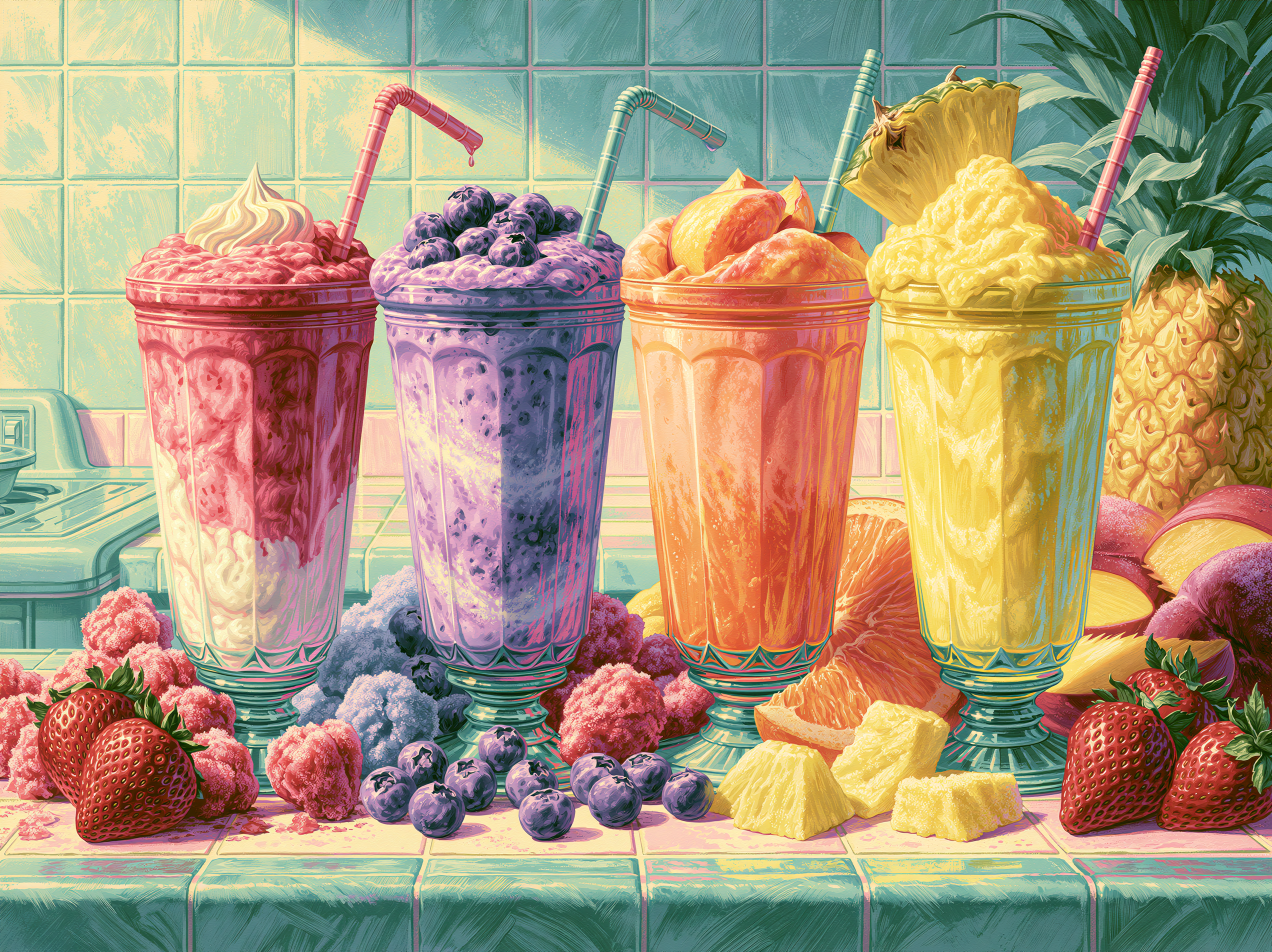
Smoothies can be as simple or as elaborate as you want them to be.
These days, I usually reach for Beachbody Vegan Shakeology. I can blend the powder with ice and water, and I know I’m getting more than I would from a basic fruit drink. It is quick, dependable, and requires almost no thought—which is sometimes exactly what I need.
Smoothies are also wonderful during the heat of summer, when turning on the oven—or even thinking about cooking a hot meal—doesn’t sound appealing. They are cool, refreshing, and fun to make. You can blend one for yourself, set out different ingredients for the family, or use whatever fruit happens to be waiting in the freezer.
If you understand the basic structure of a good smoothie, you don’t need a separate recipe for every flavor. You can use what you have, adjust it to your own tastes, and create something that is refreshing enough for a summer treat but balanced enough to work as a light meal.
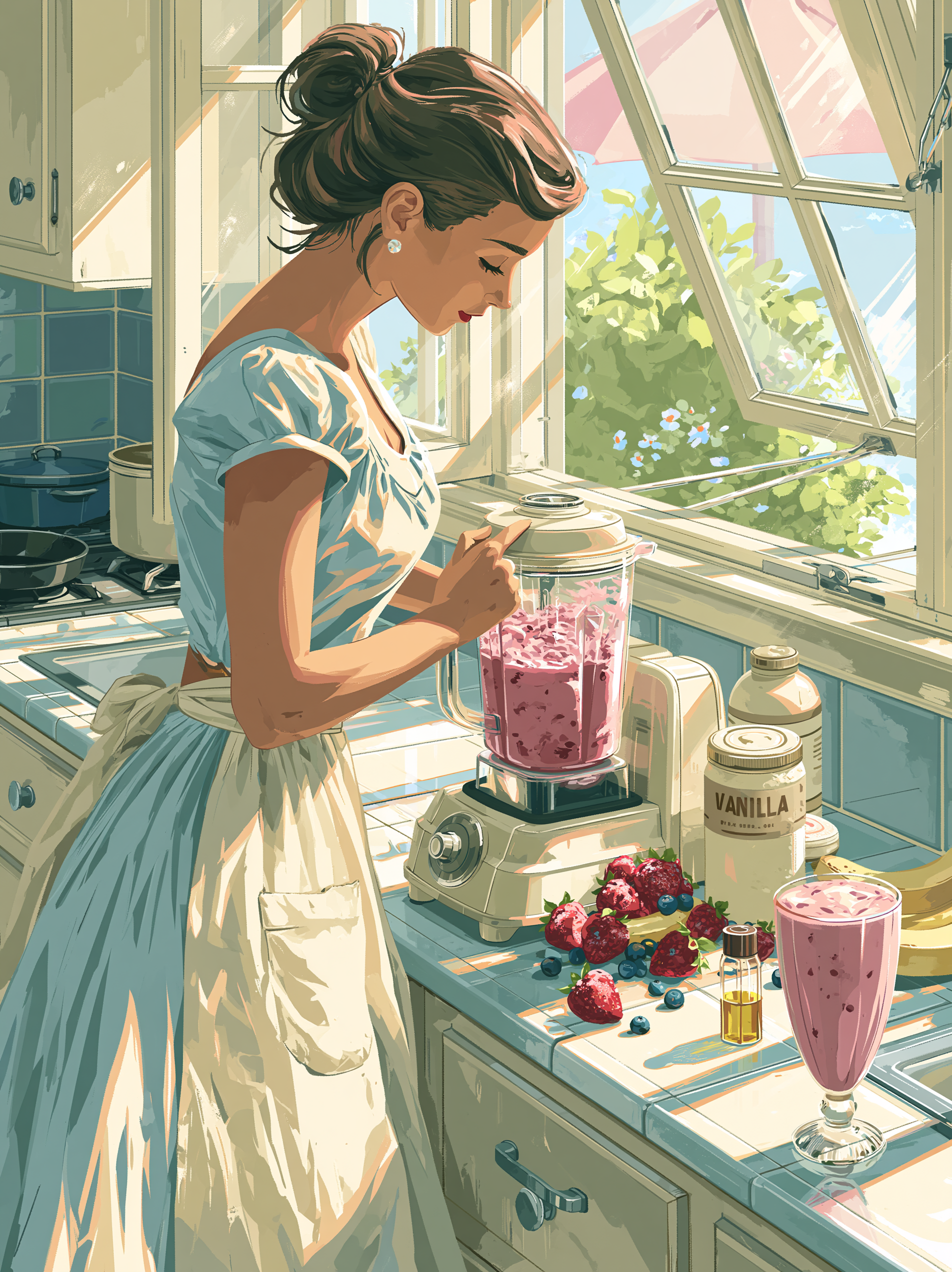
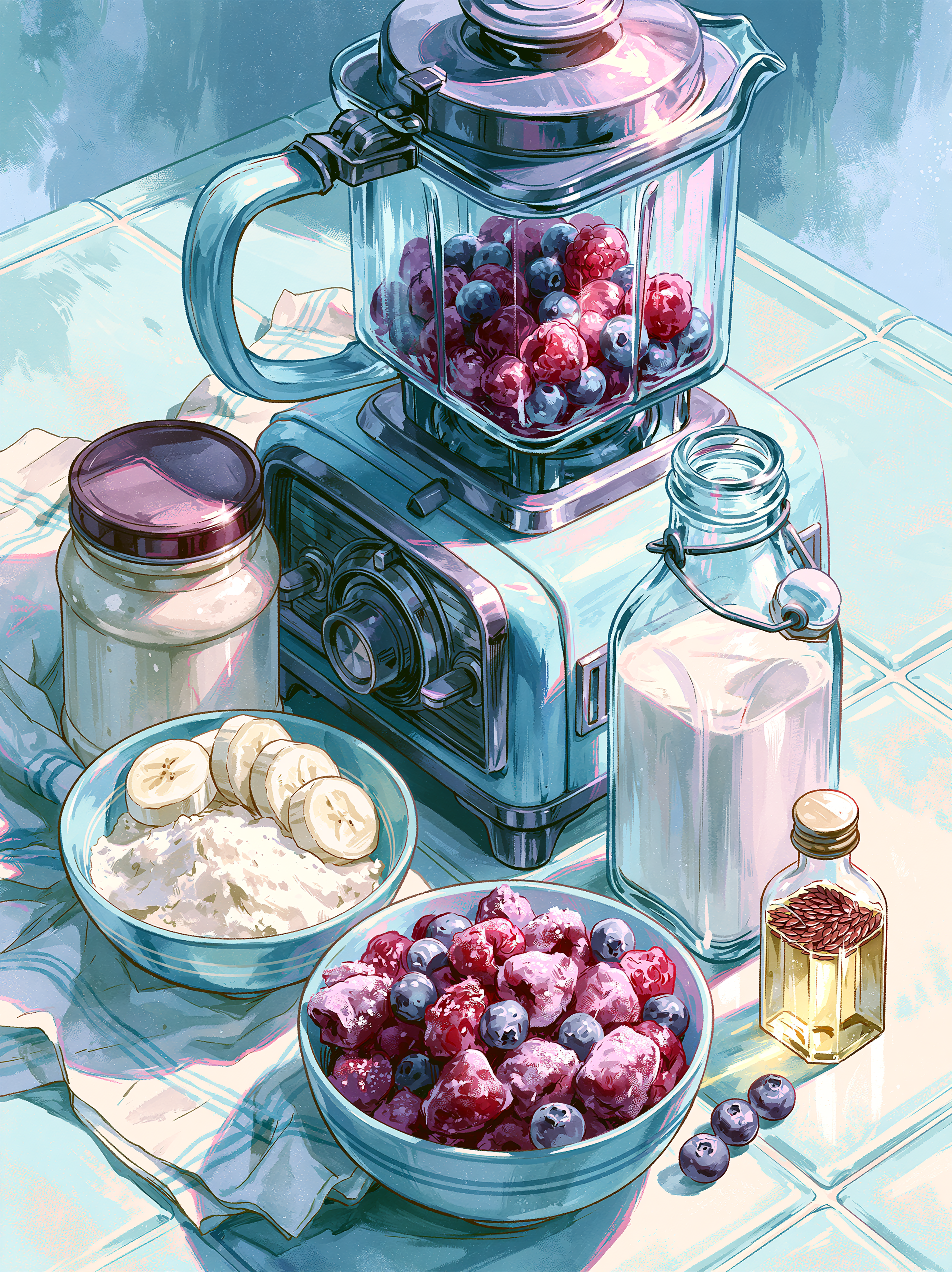
The Basic Smoothie Formula
For a creamy, balanced smoothie, start with four basic elements:
- Fruit
- Protein powder
- Liquid
- A texture helper, such as flax seed oil
You don’t have to use protein powder if you are making a smoothie purely as a treat. However, adding protein can make it more filling and help balance a smoothie that contains quite a bit of fruit.
Start with a Protein Powder That Works for You
There are many different protein powders available, but it is important to check the ingredients.
A lot of protein powders contain whey, which comes from dairy. That makes them a no-go for anyone avoiding cow dairy or dealing with a dairy sensitivity.
Fortunately, there are plenty of plant-based choices, including powders made with pea protein and other vegan protein blends.
Vanilla protein powder is especially useful for fruit smoothies. It works with berries, peaches, mango, pineapple, and just about anything else you might want to add. It can also bring a little sweetness, which may allow you to use less juice or fruit.
Why I Usually Start with a Frozen Banana
A frozen banana creates a naturally creamy base. It gives a smoothie more body and helps it feel like a shake instead of flavored juice.
If you want less fruit sugar, use half a frozen banana instead of a whole one. You will still get some of that creamy texture without as much sweetness.
You can certainly make a smoothie without banana, but you may need another ingredient—such as plant yogurt, nut butter, avocado, or additional frozen fruit—to help create a similar texture.
Frozen Fruit Usually Works Best
Fresh fruit works, but I generally recommend frozen fruit for smoothies.
Frozen fruit:
- Makes the smoothie cold without requiring much ice
- Creates a thicker, creamier texture
- Is easy to keep on hand
- Reduces the chance of a thin or watery smoothie
If you use fresh fruit, begin with less liquid. You can always add more as the smoothie blends.
Choosing Your Liquid
You can use milk, plant milk, juice, water, or a combination.
Each choice creates a slightly different smoothie:
- Milk or plant milk makes it creamier.
- Juice makes it brighter, sweeter, and more fruit-forward.
- Water keeps it light and simple.
- A combination of milk and juice gives you a nice balance of creamy and refreshing.
Unsweetened soy milk is one of my favorite choices when I want additional protein. Almond milk is lighter, while oat milk tends to be a little creamier.
Juice can be delicious, but it also adds more sugar. If your smoothie already contains banana and several servings of fruit, you may not need much juice.
The Flax Seed Oil Trick
I like adding flax seed oil to homemade smoothies. It adds healthy fat and helps the blended drink feel smoother, silkier, and less icy or grainy.
This is a tip I originally learned from my favorite doctor, Dr. Molly Linton Niedermeyer, ND, LM—and it has remained one of my favorite smoothie tricks.
You don’t need much. About a tablespoon is enough for one large smoothie.
Technically, the blender and the other ingredients are doing the emulsifying work, but the flax seed oil contributes richness and helps create that smoother, more cohesive texture.
Basic Protein Smoothie
Creamy, balanced, and easy to customize
Makes 1 large smoothie or 2 smaller smoothies.
Ingredients
- 1 frozen banana
- 1 to 1½ cups frozen or fresh fruit
- 2 heaping tablespoons vanilla protein powder, or the amount recommended for your preferred brand
- 1 tablespoon flax seed oil
- Up to 2 cups milk, plant milk, juice, water, or a combination
Instructions
- Add the banana, fruit, protein powder, flax seed oil, and about 1½ cups of the liquid to a blender.
- Blend until completely smooth.
- Add more liquid a little at a time until the smoothie reaches your preferred consistency.
- Taste and adjust, then serve immediately.
For a thicker smoothie, add more frozen fruit. For a thinner smoothie, add more liquid.
A Simple Strawberry Smoothie
This is a classic combination and a good place to begin:
- 1 frozen banana
- 1 to 1½ cups frozen strawberries
- Vanilla protein powder
- 1 tablespoon flax seed oil
- 1 cup soy milk
- Up to 1 cup orange juice
Start with less orange juice and add more as needed. The exact amount will depend on how thick you like your smoothies and how much fruit you use.
Easy Smoothie Flavor Ideas
Once you understand the base formula, you can play with different fruit and liquid combinations.
Strawberry Cream
Blend frozen banana and strawberries with vanilla protein powder, flax seed oil, and soy or almond milk.
This one is soft, familiar, and usually very kid-friendly.
Peach Orange
Combine frozen banana and peaches with vanilla protein powder, flax seed oil, orange juice, and your favorite milk or plant milk.
It is bright, refreshing, and lovely for breakfast.
Blueberry Vanilla
Blend frozen banana and blueberries with vanilla protein powder, flax seed oil, and soy or oat milk.
The blueberries give it plenty of flavor without making it overly sweet.
Strawberry Orange Creamsicle
Combine frozen banana, strawberries, vanilla protein powder, flax seed oil, orange juice, and plant milk.
The mixture of vanilla, orange, and creamy banana gives this one a little bit of a dessert feeling.
Tropical Smoothie
Blend frozen banana with a smaller amount of pineapple and mango. Add vanilla protein powder, flax seed oil, and a coconut milk beverage or almond milk.
Pineapple and mango are naturally quite sweet, so you probably won’t need juice or any additional sweetener.
How to Make a Lower-Sugar Smoothie
Smoothies can contain more sugar than we realize—especially when we combine a whole banana, several cups of fruit, and fruit juice.
That doesn’t mean fruit is bad. It simply means we can be thoughtful about how much we use and what else goes into the blender.
For a lower-sugar smoothie:
- Use half a banana instead of a whole one.
- Choose berries more often than mango or pineapple.
- Use unsweetened plant milk instead of juice.
- Include a protein powder that works for you.
- Add nut butter or plant-based yogurt for extra richness.
- Let vanilla protein powder provide some of the sweetness.
Lower-Sugar Flavor Combinations
Mixed Berry Protein Smoothie
Blend half a frozen banana with frozen blueberries and strawberries, vanilla protein powder, flax seed oil, and unsweetened soy milk.
This combination is filling, flavorful, and less sweet than a juice-based smoothie.
Strawberry Almond
Combine half a frozen banana, frozen strawberries, vanilla protein powder, flax seed oil, and unsweetened almond milk.
For more richness and staying power, add a tablespoon of almond butter.
Peach Vanilla
Blend half a frozen banana with frozen peaches, vanilla protein powder, flax seed oil, and unsweetened plant milk.
Peaches still bring plenty of flavor, even when you use a little less fruit.
Optional Smoothie Add-Ins
You can also add:
- A little extra protein powder
- Unsweetened Greek-style plant yogurt
- A spoonful of almond, cashew, or peanut butter
- A small amount of chia seeds
- Ground flaxseed
- Mild greens, such as baby spinach
- Cinnamon or vanilla
Add chia seeds carefully because they thicken quickly. A little can be lovely; too much can turn your drink into smoothie pudding.
What to Do When Your Smoothie Isn’t Quite Right
Smoothie recipes don’t have to be exact. Fruit varies in size, sweetness, and water content, so tasting and adjusting is part of the process.
If your smoothie is too thick, add more liquid.
If it is too thin, add more frozen fruit rather than a large amount of ice.
If it is too sweet, add unsweetened milk, more protein powder, or a small pinch of salt.
If it tastes flat, try a splash of juice, a little vanilla, or the tiniest pinch of salt. Sometimes that small adjustment is all it needs.
Make It Your Own
The real trick to making a good smoothie is learning the basic balance: fruit for flavor, protein for staying power, liquid to make everything blend, and a little healthy fat to improve the texture.
After that, you can play.
Use the fruit your family enjoys. Choose a protein powder that works for your dietary needs. Make it creamy with plant milk, brighten it with a little juice, or keep it simple with water.
Whether you are looking for an easy breakfast, a refreshing summer meal, or a fun afternoon treat, a smoothie doesn’t have to be complicated—or perfectly measured—to be satisfying. Start with the basic formula, blend, taste, and make it your own.
FAQs
What ingredients do you need to make a smoothie?
To make a good smoothie, typical ingredients include fruit, protein powder, liquid, and a little healthy fat or another ingredient that improves the texture. Frozen banana provides a creamy base, while additional frozen fruit adds flavor and thickness.
How do you make smoothies creamier?
Use frozen fruit rather than relying heavily on ice. Frozen banana, plant-based yogurt, nut butter, and a small amount of flax seed oil can all help create a smoother, creamier texture.
How do you make a smoothie without protein powder?
Making a smoothie without protein powder is simply just a matter of combining frozen fruit with a little fruit juice and or milk of your choice. These tend to be less creamy and more icy but also can be a refreshing treat. The key is to start small and that way you can taste and then adjust as needed. Add more frozen banana, yogurt, or creamy milk to make it smoother, add more fruit or fruit juice to make it sweeter.
How do you make smoothies without dairy?
To make a smoothie without dairy, just choose a plant-based protein powder that does not contain whey or other dairy ingredients. Blend it with frozen fruit and a dairy-free liquid such as soy, almond, oat, or coconut milk beverage.
What are low calorie liquids for smoothies?
Unsweetened coconut milk makes a great addition to smoothies and tends to be the lowest in calories for milks. If you find a tasty protein powder that you like, sometimes you can just add ice and water to keep the calories down. Fruit juice or vanilla plant based milks tend to be the highest in calories.
How to make a smoothie with frozen fruit?
Frozen fruit usually creates a colder, thicker, and creamier smoothie without requiring much ice. Fresh fruit also works, but you may need to begin with less liquid to keep the smoothie from becoming too thin. I would actually start with just frozen fruit, some protein powder, and some plant based milk. Keep the liquid down until you know if you need more.
How do you make healthy smoothies?
To make a healthy smoothie, use half a banana, choose berries more often than tropical fruit, and use unsweetened plant milk instead of juice. Adding protein powder, nut butter, flax seed oil, or unsweetened plant yogurt can also make the smoothie more satisfying without adding more fruit and sugars.
Why add flax seed oil to a smoothie?
Flax seed oil adds healthy fat and contributes to a smoother, silkier texture. About one tablespoon is usually enough for one large smoothie.
How can I make my smoothie more filling?
Add a protein powder that works for your dietary needs, along with a source of healthy fat such as flax seed oil or nut butter. Unsweetened soy milk and Greek-style plant yogurt can also add protein and staying power.
Can a smoothie be a meal replacement?
A smoothie can work as a light meal when it contains a good balance of protein, fruit, liquid, and healthy fat. A smoothie made mainly from fruit and juice may be refreshing, but it probably will not keep you satisfied for as long.
Can you make a smoothie without ice?
You can definitely make a smoothie without ice. I use frozen fruit in mine! Add more frozen fruit, half a frozen banana, plant-based yogurt, nut butter, or a small amount of chia seeds. Add chia seeds carefully because they continue to absorb liquid and can thicken a smoothie quickly.
What can I do if my smoothie is too thick?
Add liquid a little at a time and blend again. Small additions give you more control and help prevent the smoothie from becoming too thin.
How do you make a smoothie with bananas?
Try using frozen peaches, mango, avocado, plant-based yogurt, nut butter, or additional frozen berries. The flavor and texture will be different, but you can still create a thick, creamy smoothie.
Can you make smoothies ahead of time?
Smoothies generally have the best texture immediately after blending. For faster mornings, measure the fruit into individual freezer containers ahead of time, then add the protein powder, flax seed oil, and liquid when you are ready to blend.
Are fruit smoothies healthy?
A fruit smoothie is healthy or not, depending on what you add to it. It’s always a sum of its ingredients! Keep the fruit sugars lower, protein higher and you will aim more toward healthy than not.
Are smoothies good for weight loss?
If you are going for a high protein smoothie, they can help replace a meal where you might overindulge. However if it’s not as filling, then you might only be adding sugar to your diet.
How do you freeze bananas for smoothies?
I recommend peeling them, then chopping them into large chunks. Then you can put them in a freezer bag or container and keep it in the freezer for at least a few weeks. Keep in mind, they will get a little brown and then the longer you keep it in the freezer, the more ice it will accumulate. Best to do for one week or two at a time.
How long can a smoothie last in the fridge?
That will depend on the container it is in. There are insulated tumblers out there that can hold the cold for a while. If you are hoping for overnight, I wouldn’t advise it.
more2heather@gmail.com | (206) 227-6128