
Christmas is supposed to be a season of generosity, celebration, and spending time with the people we care about.
Unfortunately, it can also become a season of overspending.
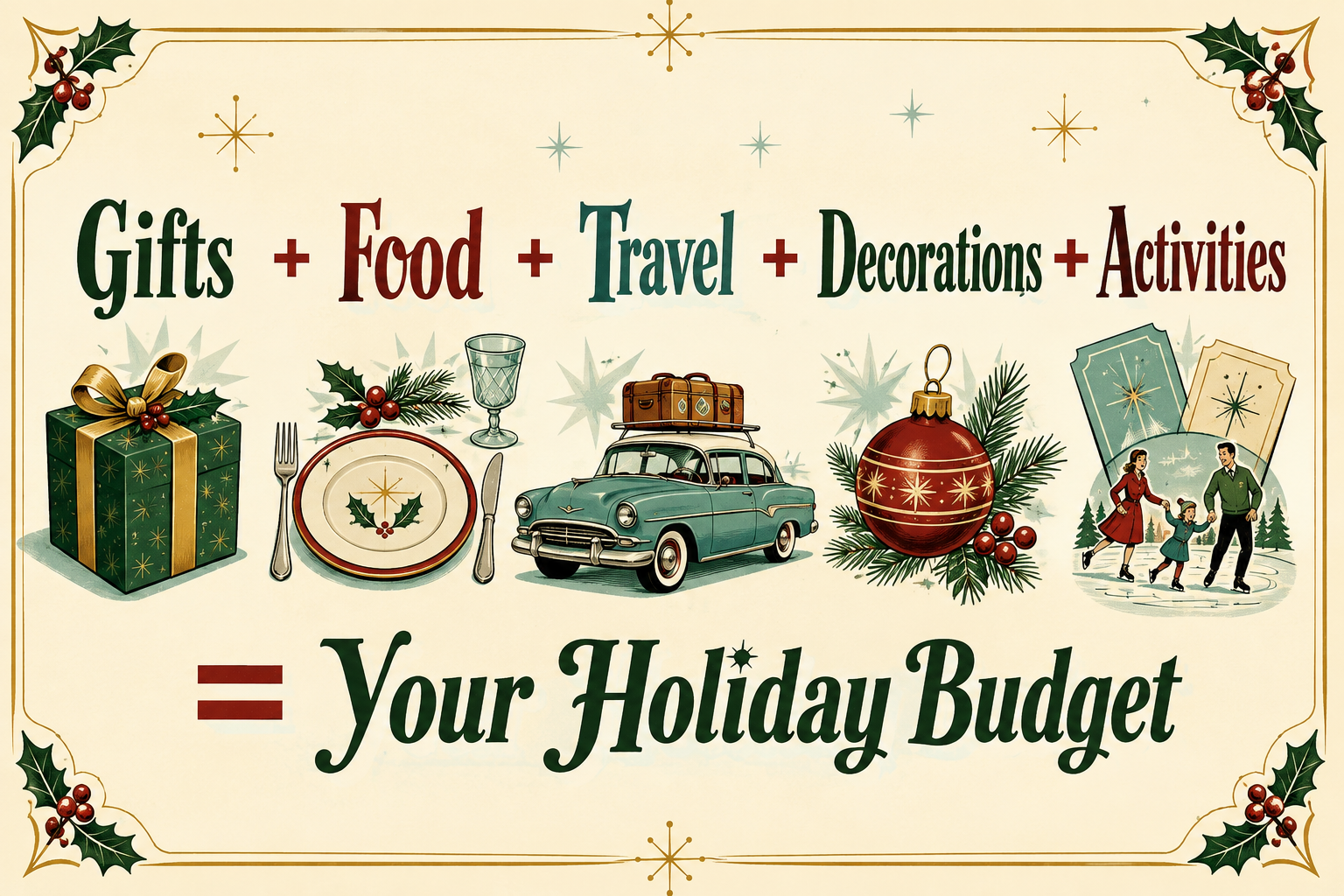
Gifts, travel, food, decorations, charitable giving, school activities, work parties, and all those “little extras” can add up surprisingly quickly. When January arrives, the celebrations may be over—but the credit card balances are still there.
Avoiding holiday debt does not mean you have to cancel Christmas or stop giving gifts. It means deciding what you can comfortably spend, choosing where that money matters most, and protecting yourself from purchases that could create stress later.

Budgeting for Holiday Spending
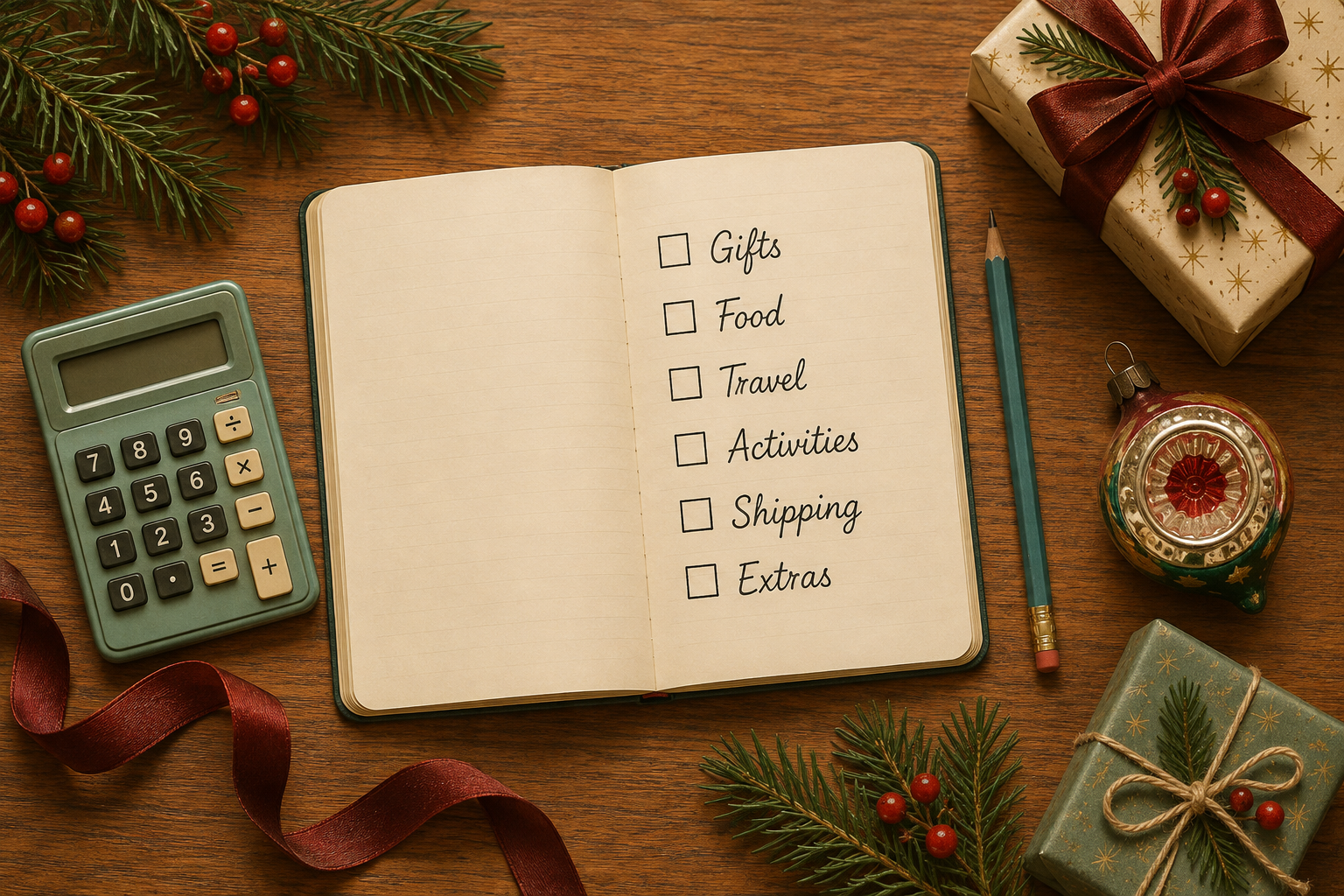
- Decide how much you can spend before making your shopping list.
- Include food, travel, decorations, and activities—not only gifts.
- Give every holiday dollar a purpose.
- Avoid relying on credit cards or Buy Now, Pay Later plans.
- Look for ways to simplify traditions rather than eliminate them.
- Leave room in your budget for forgotten and unexpected expenses.
- Start saving earlier for next Christmas, even if you begin with a small amount.
1. Holiday Spending Budget: Start with the Amount You Can Actually Spend
Before deciding what you want to buy, look at how much money you can comfortably use for Christmas.
This amount should come from money you already have or can reasonably set aside without falling behind on regular bills, draining your emergency savings, or relying on future income.
Your holiday spending target might be $300, $800, $1,500, or something completely different. The right amount is not based on what other families spend. It is based on what works for your household.
The most important part is choosing the total first.
If you make the gift list before setting the spending limit, it is much easier to create a Christmas that costs more than you can afford.
2. Other Christmas Expenses Most People Don’t Consider
Gifts may be the most obvious expense, but they are rarely the only one.
Your holiday spending plan might also need to include:
- Christmas dinner and special groceries
- Baking ingredients
- Stocking stuffers
- Wrapping paper, ribbons, and gift bags
- Shipping and postage
- Holiday clothing
- Travel, gas, or lodging
- School and workplace celebrations
- Decorations
- Family photos or Christmas cards
- Donations and charitable giving
- Tickets, outings, and seasonal activities
- Tips or thank-you gifts for service providers
These smaller expenses can quietly use a large portion of your holiday budget.
Once you know your total spending target, divide it among the categories that matter to you. That gives you a much clearer picture of what is available for gifts.
3. Why Should You Make a Christmas Gift List Before You Shop?
Write down everyone you plan to buy for and assign a spending target to each person.
Include the easy-to-forget gifts, such as:
- Teachers
- Coworkers
- Neighbors
- Hosts
- Gift exchanges
- Delivery or service providers
- Stocking stuffers
- Small “just in case” gifts
Then add everything together.
If your list is larger than your total gift budget, make adjustments before you begin shopping. You might reduce the amount spent per person, suggest a family gift exchange, give one household gift instead of several individual gifts, or replace a purchased gift with something homemade.
It is much easier to change the plan before you shop than after the charges are already on your credit card.
4. How to Make Holidays Feel Special to You
Sometimes we spend money on traditions simply because we have always done them.
Take a moment to think about what you and your family actually enjoy most.
Maybe it is Christmas morning breakfast, decorating cookies, watching the same movie every year, driving around to see holiday lights, playing games, or gathering for a special dinner.
When you know what creates the most joy, you can direct your money toward those experiences and simplify the parts no one particularly cares about.
You do not have to spend equally on every part of Christmas. You can spend intentionally on the things that matter and release some of the rest.
5. Christmas Credit Card Debt Does Not Mean a Successful Holiday
Credit cards can make holiday purchases feel less immediate, especially when you do not have to pay the bill until January.
But if you cannot pay the full balance when the statement arrives, the gifts will cost more than their original prices because of interest. You may also still be paying for this Christmas when it is time to start planning the next one.
If you use a credit card for convenience, rewards, or added purchase protection, keep a running total and make sure the money to pay it off is already available.
You can also move your holiday money into a separate checking or savings account. This creates a clear limit and makes it easier to see how much remains.
6. Watch Out for Buy Now, Pay Later Over Christmas
Buy Now, Pay Later services can make a purchase appear more affordable by dividing it into several smaller payments.
However, a smaller payment is not the same as a lower price.
Using several payment plans at once can make it difficult to remember how much you have committed to spending. Those payments may also continue into January or February, when regular household expenses have returned.
Before using one of these plans, ask yourself:
Would I still buy this if I had to pay the full price today?
If the answer is no, the purchase may not fit your current holiday budget.
7. How to Create Boundaries Around Gift Giving
Many people are relieved when someone suggests simplifying Christmas.
You might talk with family and friends about:
- Setting a price limit
- Drawing names instead of buying for everyone
- Buying gifts only for the children
- Giving one family or household gift
- Exchanging homemade gifts
- Planning an activity together instead of exchanging presents
- Choosing not to exchange gifts this year
These conversations can feel awkward at first, but they may remove financial pressure for more than one person.
A smaller gift does not mean you care less. A spending boundary simply means you are being honest about what works for you.
8. Gift Planning on a Budget
Give thoughtful gifts without spending as much. A meaningful gift does not have to be expensive.
Depending on the recipient, you might consider:
- A favorite homemade food
- A framed family photo
- A handwritten collection of family recipes
- A book purchased secondhand
- A small themed gift basket
- A plant grown from a cutting
- An offer to babysit, cook a meal, or help with a project
- A planned afternoon or outing together
- A carefully chosen item the person will genuinely use
The best gifts are not always the largest or most expensive. They are often the ones that show you were paying attention.
9. How to Avoid Impulse Buying For Christmas
Holiday shopping can become emotional very quickly.
You may feel pressure to create a perfect Christmas, make up for a difficult year, match what someone else is giving, or purchase one more thing because the gifts do not seem like “enough.”
Last-minute shopping adds another layer of pressure. When time is short, it becomes easier to pay more, add unnecessary items, or choose expensive shipping.
Before making an unplanned purchase, pause and ask:
- Is this person already covered?
- Does this fit the amount I planned to spend?
- Will this purchase make Christmas meaningfully better?
- Am I buying this because I want to—or because I feel guilty or rushed?
- How will I feel about this expense when the bill arrives?
A short pause can be enough to interrupt an emotional spending decision.
10. How Do You Budget For Unexpected Expenses? Leave a Little Room for the Unexpected
Even a well-planned Christmas can bring surprise expenses.
Someone may be added to a celebration. Shipping may cost more than expected. You may need an extra dish for dinner or suddenly remember a gift exchange.
Try not to assign every available dollar at the beginning. Keep a small portion of the holiday budget—perhaps 5% to 10%—for unexpected expenses.
If you do not use it, the remaining money can return to savings or become the beginning of next year’s Christmas fund.
11. Start a Holiday Savings Plan and Fund for Next Year
One of the easiest ways to avoid future holiday debt is to turn Christmas into a regular monthly expense.
If you want to have $1,200 available next Christmas, saving $100 per month will get you there. If $100 is not comfortable, start with $25 or $50. Any amount saved ahead of time reduces what you will need to find at the end of the year.
You can keep this money in a separate savings account and automate the transfer each payday or each month.
Christmas is not an unexpected expense—it arrives at the same time every year. Planning for it gradually can make the season feel much more manageable.
What If You Have Overspend During the Holidays?
First, do not panic—and do not ignore it.
Add up the balances and remaining payments so you know exactly what you owe. Stop adding new holiday purchases, decide which balance to target first, and create a realistic repayment plan that still allows you to cover your regular bills.
You may need to temporarily reduce spending in a few flexible categories, return unused purchases, or put extra income toward the balance.
The purpose is not to punish yourself for overspending. It is to understand what happened, clean it up, and use what you learned to create a better plan for next year.
How to Create a Meaningful Christmas
It is easy to connect a successful Christmas with the number of gifts under the tree, the amount of food on the table, or how closely the day matches the picture in our heads.
But the people who care about you do not want you to spend the next several months struggling because of what you bought for them.
Choose a holiday spending target that works for your real life. Spend intentionally, simplify where you can, and allow the season to be joyful without requiring it to be financially perfect.
A Christmas you can afford may feel lighter—not smaller.
A Little More Money Clarity
If holiday spending has made your finances feel scattered, this can be a good time to look at the bigger picture. Understanding where your money is going, separating business and personal expenses, and creating simple systems for the coming year can make financial decisions feel much less overwhelming.
Money does not have to be perfect to be useful. It simply needs a little organization, honest information, and a plan that works for your actual life.
This article provides general educational information and is not individualized financial advice. Consider speaking with a qualified financial professional if you need help evaluating debt or making financial decisions for your household.
FAQs
When should you start making a Christmas list?
Now! Or really as soon as Christmas is over. Anytime is a good time to start a list, that way you can add things as you think of something someone would enjoy.
How to start paying off holiday debt?
First, make sure you know what the APR is on the debt. Do you have the debt in more than one place? If not, then just make sure you are paying more than the minimum each month and as much as you can to pay it off as you can. If you have more than one source of debt, you want to pay the minimum on all cards or debt and then pay extra on the one that has the highest APR. The more sources of debt, the more planning it takes. Sometimes you need to cut back in other areas to get rid of your debt. Remember, interest is not something you want to spend your money on.
What is a holiday debt hangover?
This is a financial stress that follows holiday overspending. It’s often when credit card bills and payment-plan balances arrive in January and beyond.
Is it smart to transfer credit card balance to a new credit card with 0% interest?
This is one way people handle credit card debt. Just make sure you consider that opening a new credit card is a hit on your credit score. Closing longer term accounts can also affect your credit score.
How many people go into debt for Christmas?
Recent surveys suggest about 1 in 3 Americans go into debt during the Christmas and holiday season. Let’s change that!
more2heather@gmail.com | (206) 227-6128