
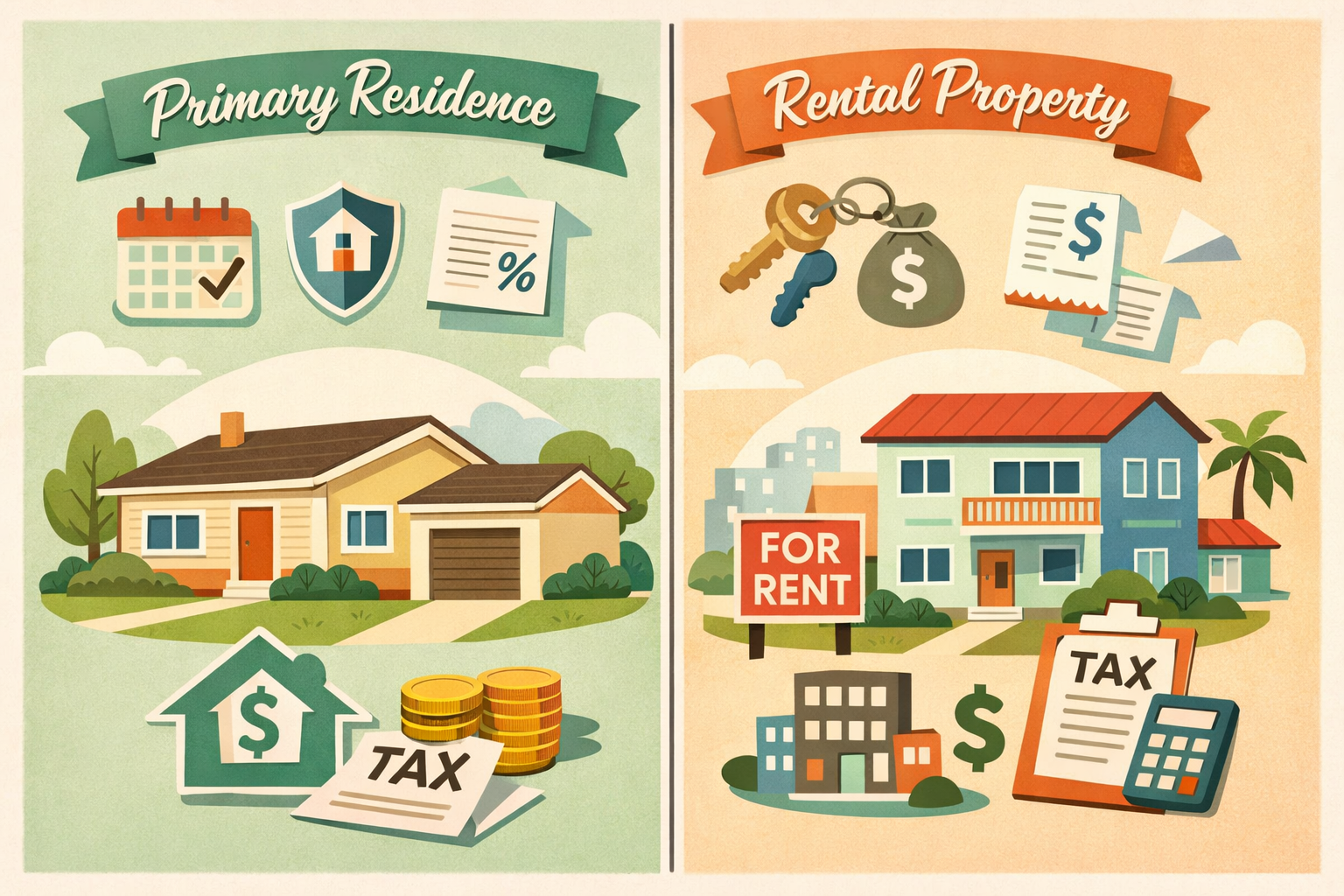
If you own property, you’ve probably heard the word depreciation tossed around—especially if rentals are involved. But depreciation doesn’t work the same way for every home, and understanding the difference can save you (or your clients) real money at tax time.
Let’s break it down without the tax-code headache.
What Is Depreciation (in plain English)?
Depreciation is the IRS’s way of saying:
“This property wears out over time, so you can deduct a portion of its value each year.”
Instead of deducting the full cost of a property all at once, depreciation lets you spread that cost over multiple years—creating a non-cash tax deduction.
Important note:
📌 Land does not depreciate. Only the building (and certain improvements) do.
Can you depreciate your primary residence? 🏡
Here’s the short answer:
👉 You cannot depreciate your primary home.
Why?
Because the IRS considers your primary residence a personal-use asset, not a business asset.
What can happen with a primary residence:
- You may deduct mortgage interest (if you itemize)
- You may deduct property taxes (subject to SALT limits)
- When you sell, you may qualify for a capital gains exclusion
($250,000 single / $500,000 married filing jointly)
But depreciation? ❌ Not allowed.
How do you claim depreciation on rental property? 🏘️
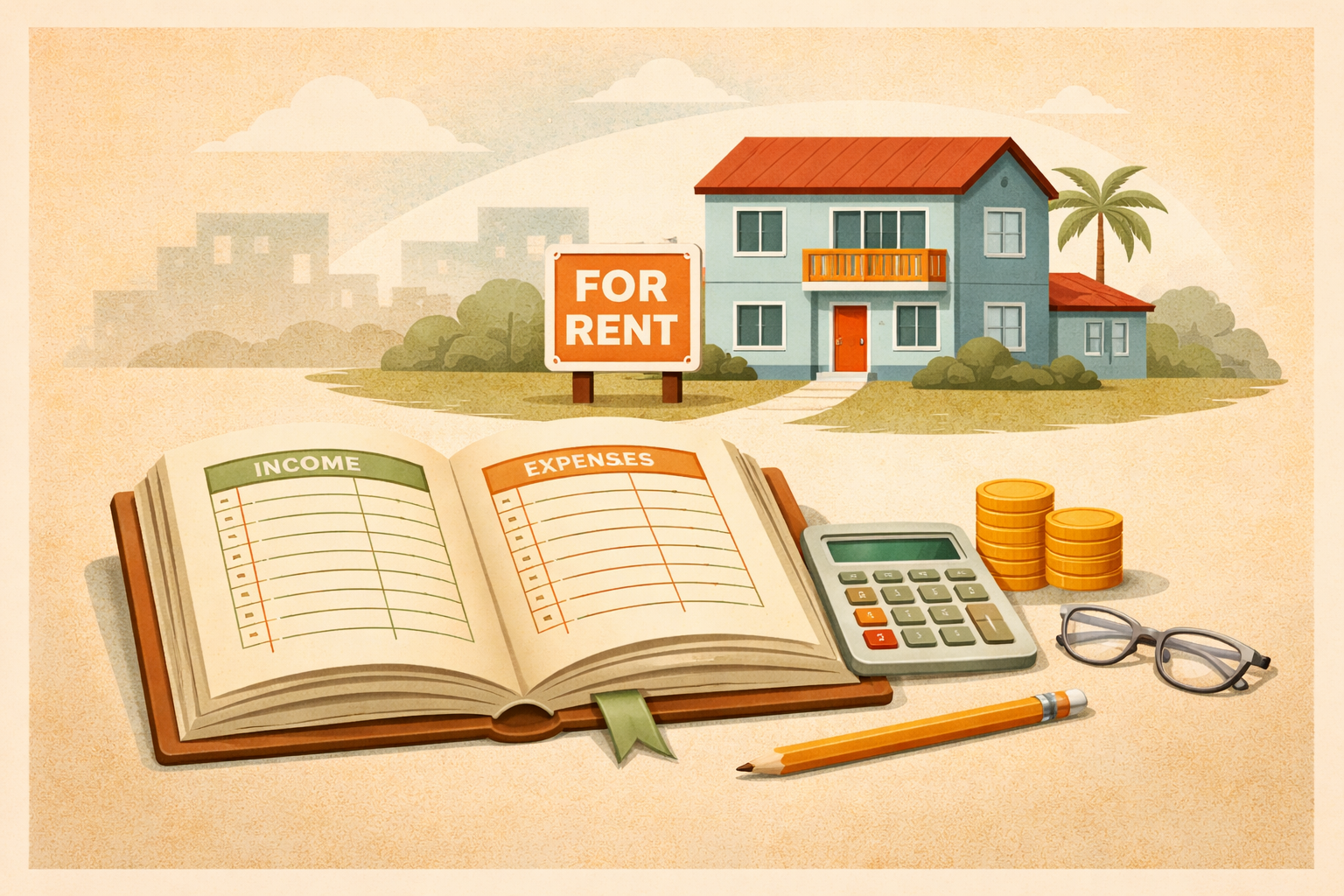
If a property is used as a rental or income-producing property, depreciation is allowed—and it’s one of the biggest tax advantages of owning rentals.
How Residential Rental Depreciation Works
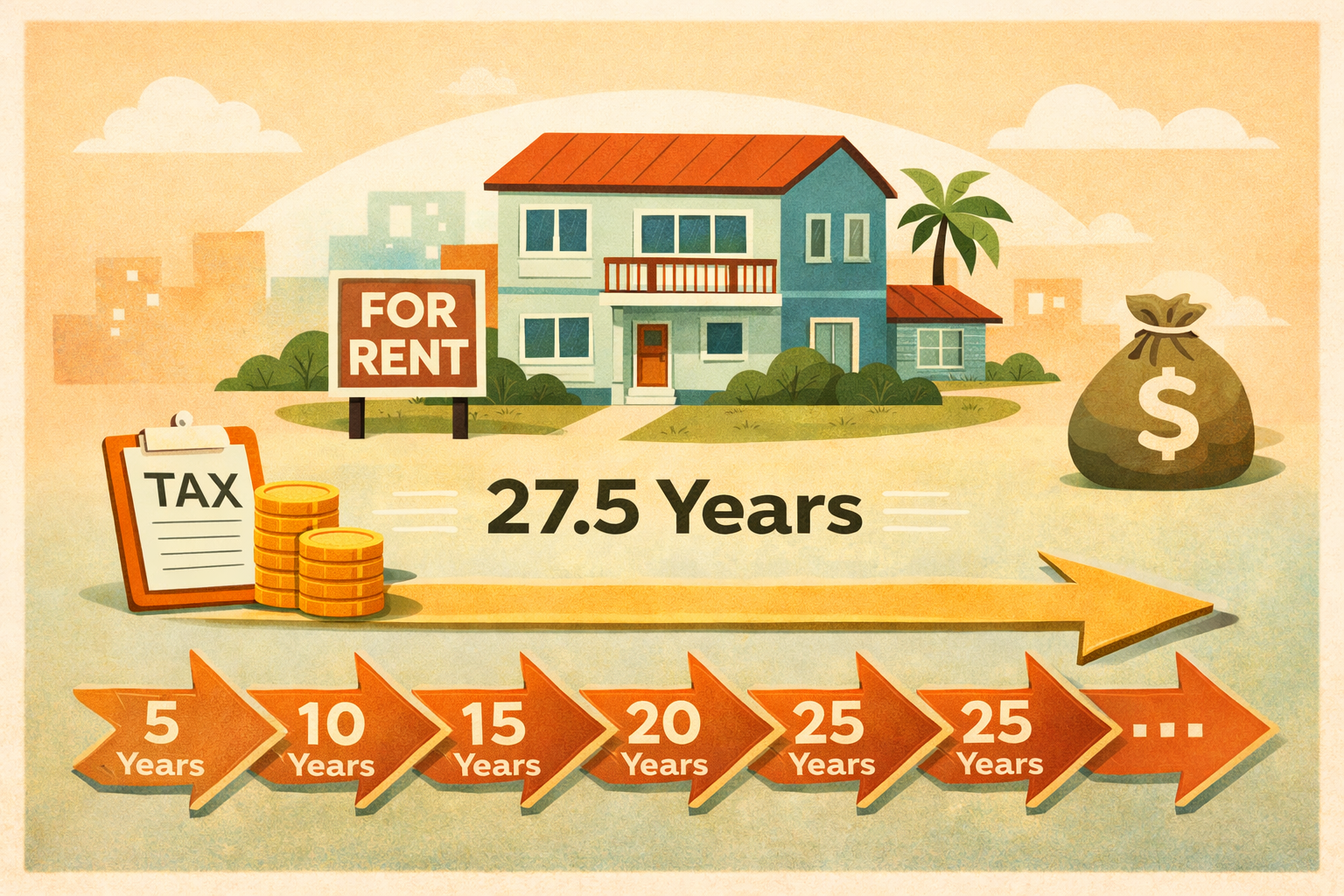
- Residential rental properties are depreciated over 27.5 years
- You depreciate only the building value, not the land
- The deduction is taken every year, whether or not you had positive cash flow
Example
You buy a rental property for $400,000
- Land value: $100,000
- Building value: $300,000
Annual depreciation deduction:
$300,000 ÷ 27.5 = $10,909 per year
That’s $10,909 off your taxable rental income—without writing a check.
Are home remodeling costs tax deductible?
Not all upgrades are treated the same.
Repairs (Usually Deducted Immediately)
- Fixing leaks
- Repainting
- Replacing broken fixtures
Improvements (Depreciated Over Time)
- New roof
- HVAC system
- Kitchen remodel
- Room additions
Improvements are added to the property’s depreciable basis and written off gradually.
Note: Make sure your Improvements are well documented!
Depreciation Recapture: What happens when you sell?
Here’s the part people don’t always hear about.
When you sell a rental property:
- The IRS expects you to account for depreciation taken (or that should have been taken)
- This is called depreciation recapture
- It’s taxed separately—often at up to 25%
Important nuance:
👉 Even if you didn’t claim depreciation, the IRS still assumes you did.
This is why proper bookkeeping and planning matter so much.
Primary residence vs. rental property: What if a home changes use?
This comes up a lot.
Primary Home → Rental
- Depreciation starts when it becomes a rental
- Based on the lower of:
- Fair market value at conversion
- Original cost basis
Rental → Primary Home
- Depreciation stops when personal use begins
- Prior depreciation still counts for recapture later
Why is depreciation important?
✔ Reduces taxable income
✔ Improves cash flow
✔ Often turns “profitable” rentals into “tax losses” (on paper)
✔ Works year after year
And yet—it’s one of the most misunderstood deductions out there.
A Quick Reminder
Tax rules come from the Internal Revenue Service, but how they apply to your situation depends on:
- How the property is used
- Ownership structure
- Your overall tax picture
A CPA or tax advisor should always handle:
- Initial depreciation setup
- Annual depreciation entries
- Year-end adjustments
- Sale calculations
Depreciation isn’t about “gaming the system”—it’s about understanding how the system was designed to encourage investment in housing and rental properties.
If you own rentals (or plan to), this is one of the most valuable concepts you can learn—and track correctly.
FAQs
Where is depreciation on the income statement?
Depreciation appears as an expense on the income statement, typically listed under operating expenses. It reduces net income but does not involve a cash outflow. For rental properties, it’s often included as “depreciation expenses.”
How many years can you claim depreciation on a house?
Residential rental properties are depreciated over 27.5 years.
What is depreciation in finance?
Depreciation is the process of spreading the cost of an asset over its useful life. In finance and accounting, it reflects how an asset loses value over time. It also provides a tax deduction for business and rental property owners.
Do manufactured homes depreciate?
Manufactured homes can depreciate, especially if they are not permanently attached to land. However, if they are classified as real property (attached to land you own), they may be depreciated like a traditional home for tax purposes.
How do you calculate home depreciation?
Home depreciation is calculated by taking the value of the building (not the land) and dividing it over its useful life. For residential rental property, the IRS typically uses 27.5 years. You must first separate land value from the total purchase price.
How do you calculate depreciation on a rental property?
To calculate rental property depreciation, subtract the land value from the purchase price to get the building value. Then divide that amount by 27.5 years for residential property. This gives you your annual depreciation deduction.
more2heather@gmail.com | (206) 227-6128